Implicit Regularization of SGD Reduces Shortcut Learning
Nahal Mirzaie, Alireza Alipanah, Ali Abbasi, Amirmahdi Farzane, Hossein Jafarinia, Erfan Sobhaei, Mahdi Ghaznavi, Amir Najafi, Mahdieh Soleymani Baghshah, and Mohammad Hossein Rohban
In The Fourteenth International Conference on Learning Representations, 2026
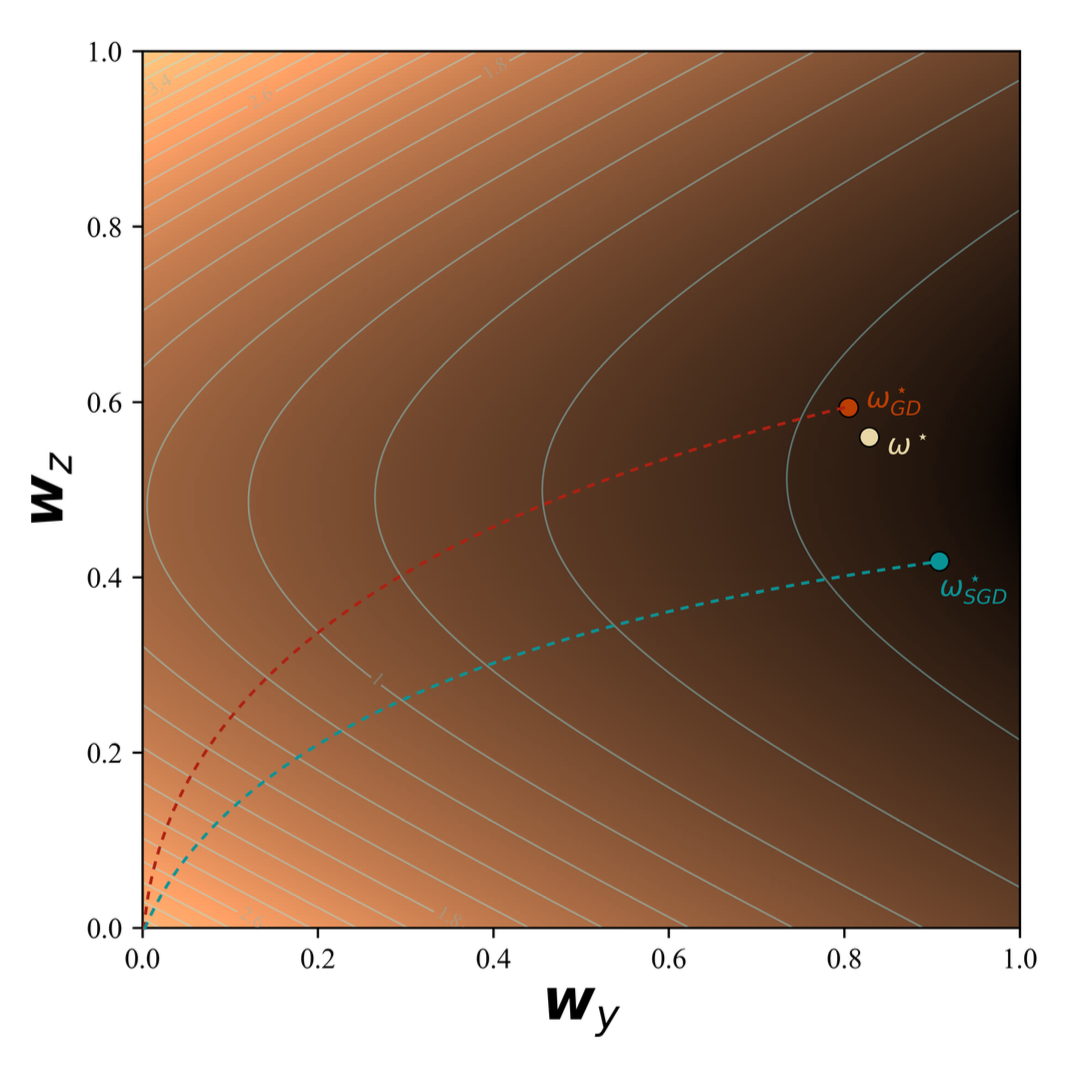
Training with stochastic gradient descent (SGD) at moderately large learning rates has been observed to improve robustness against spurious correlations, strong cor- relation between non-predictive features and target labels. Yet, the mechanism underlying this effect remains unclear. In this work, we identify batch size as an additional critical factor and show that robustness gains arise from the implicit regularization of SGD, which intensifies with larger learning rates and smaller batch sizes. This implicit regularization reduces reliance on spurious or short- cut features, thereby enhancing robustness while preserving accuracy. Importantly, this effect appears unique to SGD: gradient descent (GD) does not con- fer the same benefit and may even exacerbate shortcut reliance. Theoretically, we establish this phenomenon in linear models by leveraging statistical formulations of spurious correlations, proving that SGD systematically suppresses spurious feature dependence. Empirically, we demonstrate that the effect extends to deep neural networks across multiple benchmarks.
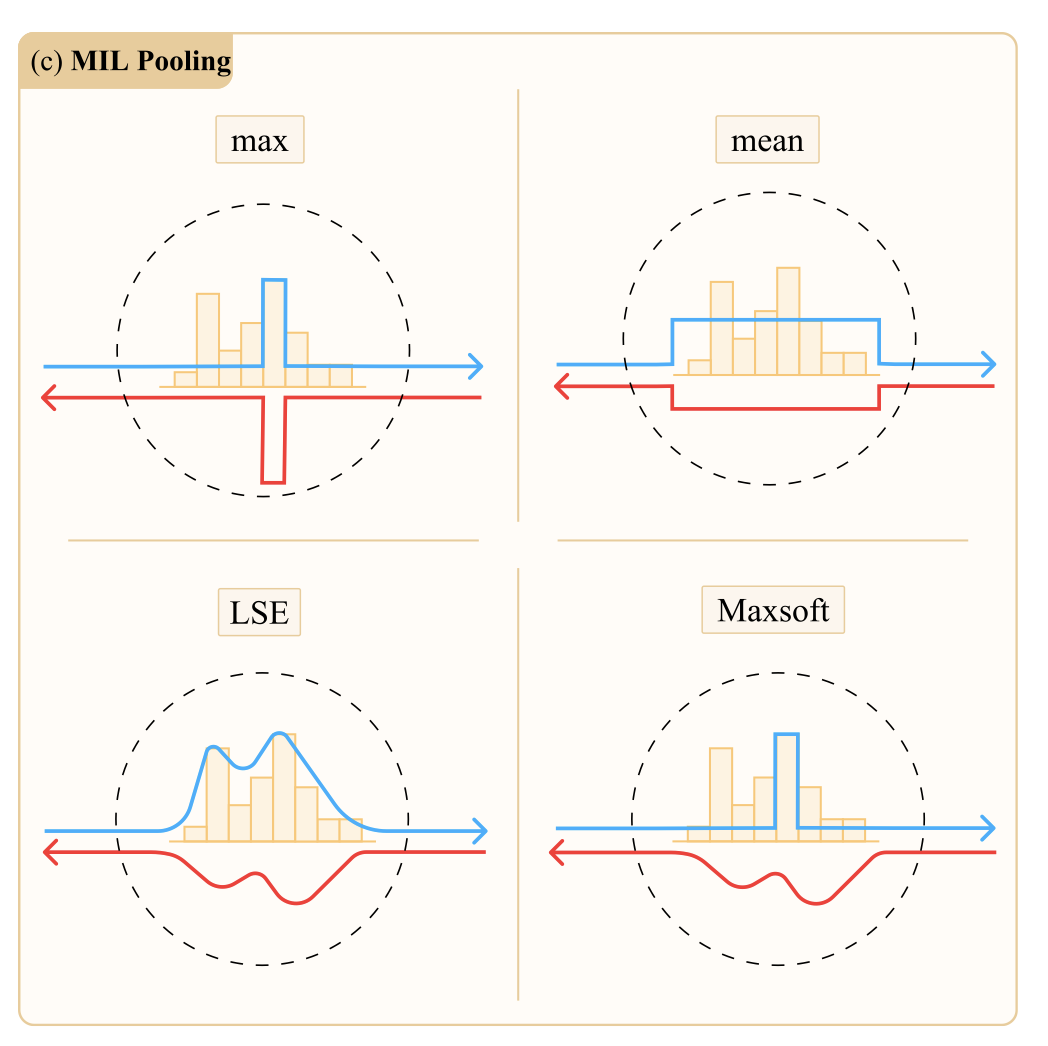 Navigating the MIL Trade-Off: Flexible Pooling for Whole Slide Image ClassificationIn Advances in Neural Information Processing Systems, 2025
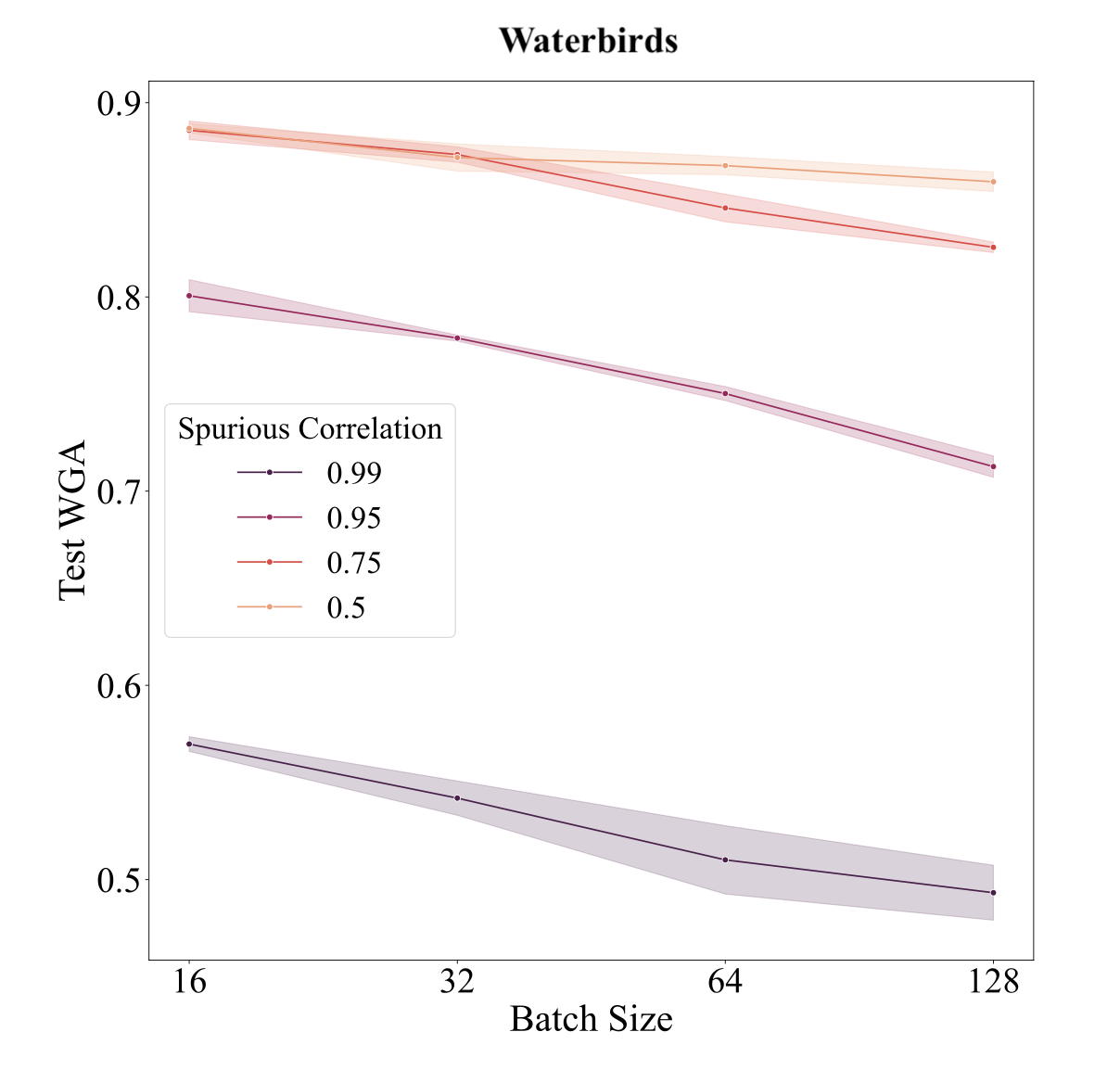 The Silent Helper: How Implicit Regularization Enhances Group RobustnessIn High-dimensional Learning Dynamics 2025, 2025